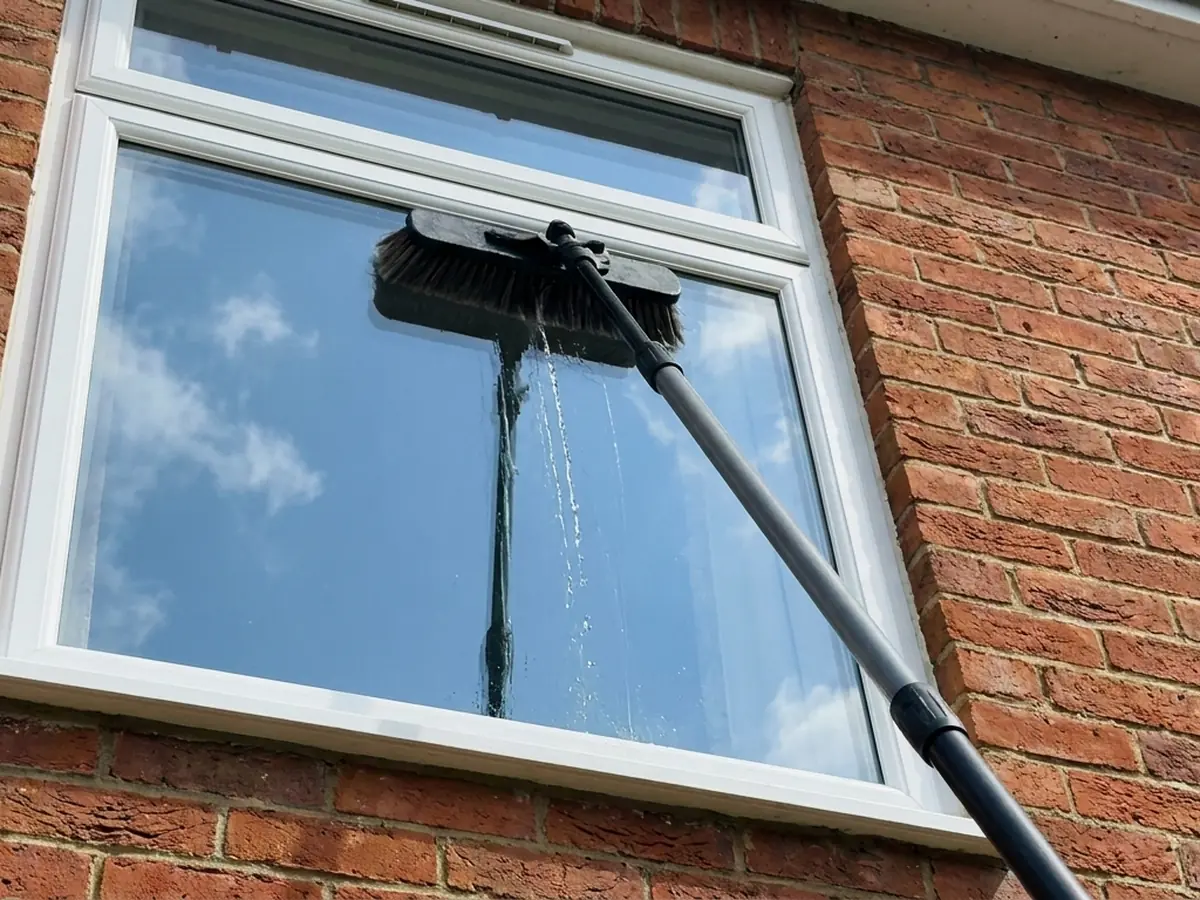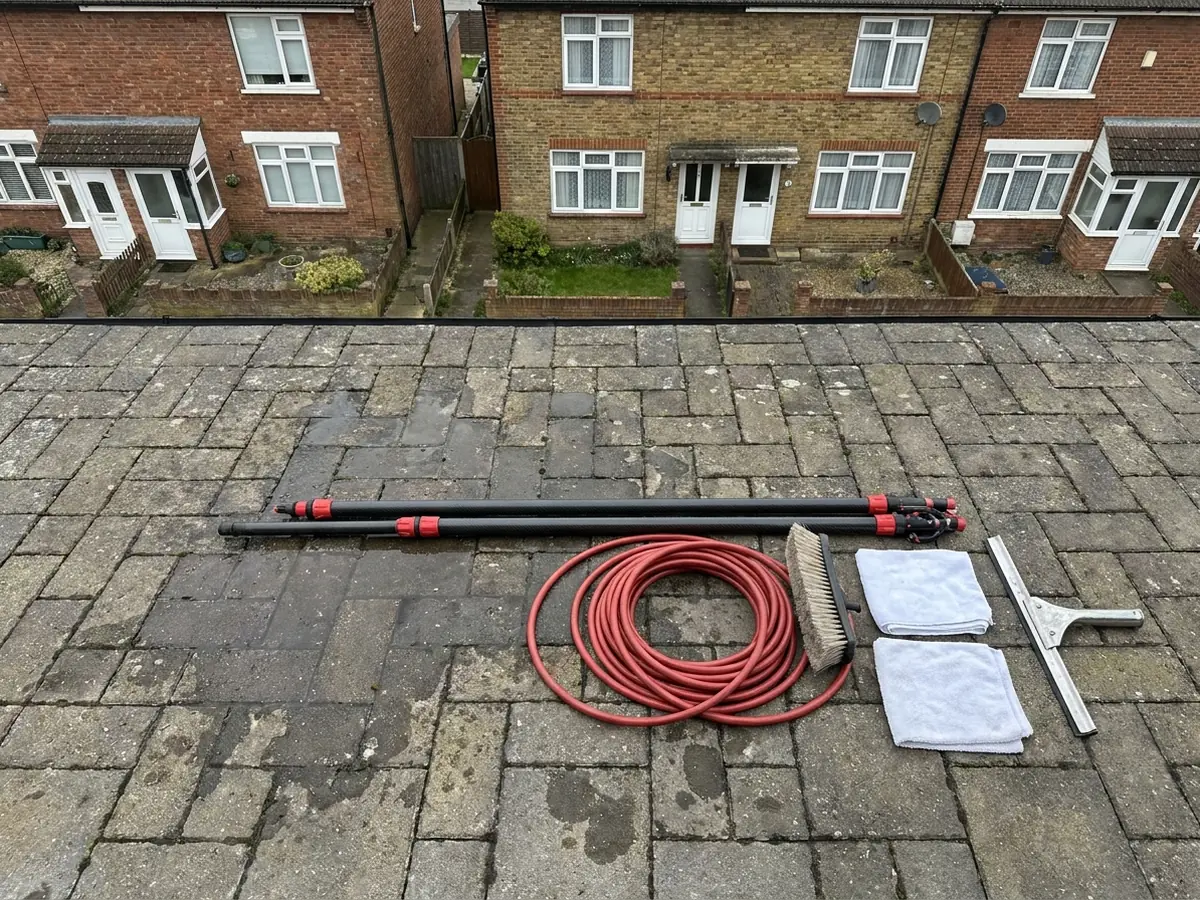
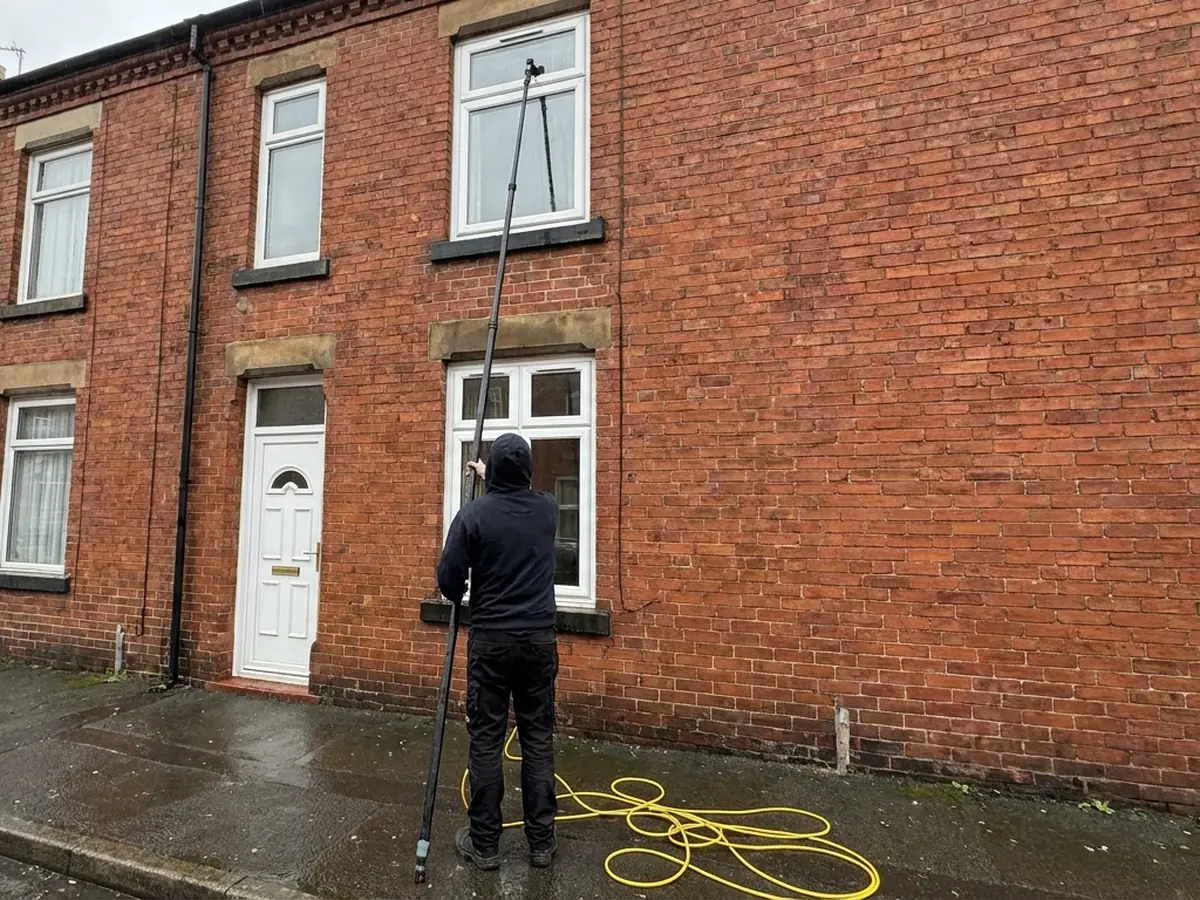
A window cleaning risk assessment and method statement (RAMS) should explain how the work is done, the main risks on your site and how each is controlled: working from the ground with water-fed poles, keeping hoses tidy, protecting the public, avoiding overhead cables and stopping in high wind.
What is a RAMS?
RAMS stands for risk assessment and method statement. The risk assessment lists what could go wrong on a job and how likely and serious it is. The method statement describes, step by step, how the work will be done safely. Many organisations ask for one before any contractor starts work on site.
For window cleaning, a short and specific document is far more useful than a long generic one. It should describe your building, not a typical building.
What should it cover for window cleaning?
Work at height comes first. The Work at Height Regulations 2005 say that work at height should be avoided where it is reasonably practicable to do the work another way. Water-fed pole cleaning does exactly that for most low and mid-rise buildings, because the cleaner stays on the ground.
After that, the main points are slips and trips from hoses and wet paving, members of the public and staff walking past, overhead power cables and wind, vehicles in car parks, and lifting kit in and out of the van. Each should have a simple control, such as running hoses along walls, cleaning entrances before opening, and stopping work in high wind.
What should the site tell the cleaner?
A RAMS works both ways. Tell your window cleaner about anything on site they need to know: fragile roofs, areas with restricted access, times when the car park is busy, alarms on doors, and any site rules for contractors. Sharing that before the first visit makes the document accurate and saves time on the day.
Does every window clean need a new RAMS?
No. One RAMS for a site is normally enough while the work stays the same. It should be reviewed if something changes, such as new building work, a new entrance, or a different method like using a ladder or a mobile platform for a particular window.
For general guidance on work at height in the workplace, the Health and Safety Executive publishes clear, free advice.
What else might you ask for?
Organisations often ask for evidence of insurance, a contact name and number for the day, and details of who will attend. Schools and care homes may have their own visitor and safeguarding rules. Ask at the start so everything is in place before the first clean.
Who should keep a copy?
Keep the RAMS with your other contractor records, and make sure whoever lets the cleaner in on the day knows it exists. If your site has a permit-to-work system, the cleaner should follow it. If anything on site changes, such as scaffolding, new planting or a change to the car park, let your cleaner know before the next visit so the plan can be updated.
Source: the Work at Height Regulations 2005.
Source: HSE guidance on work at height.
Quick questions
Do you provide a RAMS for commercial sites?
Yes. We write one for your building after the site survey.
Is water-fed pole cleaning classed as work at height?
The cleaner stays on the ground, which is how the regulations prefer work to be done where possible.
How often should a RAMS be updated?
When the work or the site changes, or at a review date your organisation sets.